
A property tour usually comes down to one moment: the second a family walks past the clubhouse and their kids spot the playground first. That's the instant a leasing agent stops selling because the kids have already made the decision for the family. It plays out on tours across Texas, Louisiana, and Oklahoma most weeks.
For multifamily communities and neighborhoods competing for the same families, a well-built playground shows up in touring decisions, renewal conversations, and curb appeal all at once. A neglected one shows up too, usually in the story a family tells about why they picked somewhere else.
Here's what to know about how a playground pays off for your property, and how to choose the right amenities for your residents.
Playgrounds and Property Value
Does a Playground Increase Property Value?
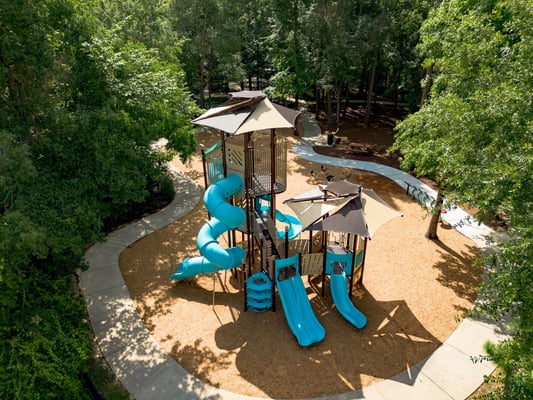
Yes, though the return looks different than it would from a roof replacement or a resurfaced parking lot. A playground works on the two things that shape how a multifamily community or neighborhood actually performs: it helps fill vacancies faster, and it gives the residents you already have one more reason to stay. Leasing teams walk families straight past the clubhouse to it, and HOA boards point to it when a resident asks what their dues are actually paying for. When two properties look similar on paper, the one with a real place for kids to play is often the one a family remembers on the drive home: a slide their daughter finally conquered, or a swing set that had the whole group racing to be first. Higher occupancy, fewer units to re-lease, and a property that looks cared for from the street: that's where a playground earns its keep. That same combination of steady occupancy and curb appeal is also what stands out whenever it comes time to sell or refinance the property. A community that's clearly cared for makes a stronger impression than one that isn't.
How much value a playground adds comes down to execution. An outdated play structure with rusted chains or cracked surfacing can hurt a property's image just as easily as a new one helps it, so the equipment, surfacing, and layout matter as much as the decision to add one in the first place. A playground that's clearly past its useful life reads as one more thing that's been neglected, not an amenity. We've handled design, permitting, and installation as one process since 1981, so a new playground reads as a finished, welcoming feature from day one and keeps adding value for years, not a project that still looks unfinished.
Amenities for Apartments & HOAs
What Amenities Do Families Actually Want?
Walk a well-used community playground on a Saturday morning and the same pattern shows up: parents on benches in the shade, kids of every age finding their own corner of the structure, a dog tied up nearby while its owner keeps watch. Families tend to look for the same handful of things, whether they're touring an apartment community or walking through an HOA's common area.
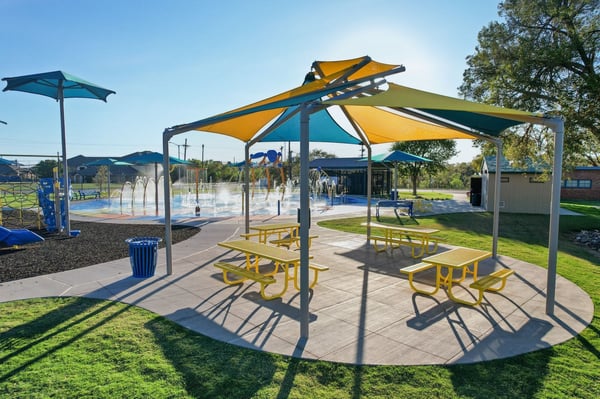
Play equipment for a range of ages matters most, so a toddler on the low platforms and an older sibling racing across the climbing wall can both find their place at the same structure. Safety surfacing parents can trust with younger kids, like poured-in-place rubber or engineered wood fiber, goes a long way toward putting caregivers at ease. Shade and seating, with tables or benches nearby, make it possible for parents and grandparents to actually stay and supervise instead of just dropping kids off. Clear sightlines across the play area mean no one loses track of a child behind a structure, and a few nearby extras, like a dog park, outdoor fitness equipment, or a splash pad, can turn one amenity into a real gathering space for the whole community.
Communities that get these basics right tend to see the playground become a genuine gathering spot instead of sitting empty.

Do Playgrounds Attract and Retain Tenants?
They're one of the few amenities that read the same way to a young family and to an empty-nester board member: a sign that the property is cared for. We've helped design playgrounds for apartment communities across Texas, Louisiana, and Oklahoma, where a family-friendly play area is often what gets a listing a second look from parents comparing options, sometimes before they've even toured the unit.
For HOA boards, the calculation leans more toward keeping residents than winning new ones. At The Falls at Imperial Oaks, we partnered with property manager, Goodwin & Company, to revitalize the clubhouse playground, adding a tower play structure, a rope climbing feature, an inclusive Mom & Me swing, and musical play elements beneath the community's mature trees next to the pool, with a surrounding sidewalk so parents can stroll while keeping an eye on their kids.
A playground that's falling apart, or one that never got the right surfacing or shade to begin with, tends to become a recurring complaint at board meetings. A durable, properly maintained one does the opposite, fading into the background as one more reason people renew their lease or stay in the neighborhood, lowering turnover instead of adding to it.
The bigger impact comes less from a specific premium on day one than from keeping units filled and residents renewing instead of shopping around at their next lease date.
A playground can also reduce some of the wear and tear property managers deal with elsewhere on site, since kids with a real place to play are less likely to end up in hallways, parking lots, or landscaped areas that weren't built for it.

We've worked alongside developments and HOA communities on exactly this kind of project, from initial layout through ongoing maintenance, and we're happy to help you figure out what makes sense for your site and budget before you commit to a design. It's also worth asking how a playground fits into your property's broader return on investment, a question we get into in more depth in our post on commercial playground ROI.
Ready to see what a playground could do for your property? Reach out to our team to talk through your site, your budget, and what your residents will appreciate.