Planning a new playground for your school, park, or community space requires more than picking colorful structures from a catalog. You need equipment that meets safety standards, fits your site, serves your community for decades, and stays on budget. Kraftsman helps municipalities, schools, developers, HOAs, landscape architects and others turn outdoor spaces into welcoming play destinations through turnkey design, installation, and ongoing support.
This guide walks you through every factor that affects commercial playground equipment selection—from site assessment to surfacing, safety compliance to hidden costs. By the end, you will have the knowledge to make confident decisions and avoid common planning mistakes.
Key Takeaways: How to Choose Commercial Playground Equipment
- Match equipment to your intended age groups and always separate play zones for toddlers, preschoolers, and school-age children.
- Use a conceptual "per child" budgeting approach as an initial planning tool, then account for additional project costs such as safety surfacing, installation, site preparation, and other site amenities.
- Verify all equipment meets current ASTM F1487 and CPSC safety standards before purchasing.
- Kraftsman offers turnkey services from design through installation and maintenance to simplify your project planning.
- Choose impact-attenuating surfacing materials tested to ASTM F1292 standards to protect children from fall-related injuries.
What Makes Commercial Playground Equipment Different from Residential Options?
Commercial playground equipment is engineered for heavy daily use by dozens or hundreds of children. Unlike backyard play sets, commercial structures must withstand constant wear, harsh weather, and the stress of multiple simultaneous users.
Manufacturers build commercial equipment with heavier-gauge steel, thicker plastics, and industrial-grade fasteners. These materials resist corrosion, UV degradation, and vandalism far better than residential alternatives. The U.S. Consumer Product Safety Commission estimates nearly 200,000 playground-related emergency room visits occur annually, which is why commercial equipment is built to more rigorous public-use safety standards than residential standards that govern backyard sets.
Commercial structures are typically backed by manufacturer warranties on structural components, often ten to fifteen years or longer, provided by the manufacturer on the manufacturer's terms. Coverage varies by manufacturer and by component.
How Do You Assess Your Site Before Selecting Equipment?
Site assessment forms the foundation of every successful playground project. Skipping this step leads to equipment that does not fit, drainage problems, or unexpected costs during installation.
Measure Your Available Space
Start by measuring the total area available for your playground. Remember that play structures need use zones—the safety surfacing area surrounding equipment where children might land after falling or exiting. Use zones typically extend six feet from the perimeter of stationary equipment and even farther for swings.
A play area that looks spacious on paper may feel cramped once you account for required clearances. Most composite structures need at least 2,500 square feet of usable space, with larger destination playgrounds requiring 5,000 square feet or more.
Kraftsman can help evaluate your site, measure the available space, and develop a layout that accounts for required use zones, clearances, and the overall fit of your selected equipment.
Evaluate Drainage and Slope
Poor drainage destroys surfacing materials and creates standing water that breeds mosquitoes and causes equipment to deteriorate. Walk your site after heavy rain to identify low spots where water collects.
Slopes affect both installation costs and accessibility. The Americans with Disabilities Act requires accessible routes with slopes no steeper than 1:16 within play areas. Sites with significant grade changes may need retaining walls, regrading, or creative design solutions.
Kraftsman can help assess drainage patterns, slope conditions, and overall site constraints early in the planning process. By evaluating these factors before installation, our team can help develop a layout that supports accessibility, protects long-term performance, and reduces the risk of avoidable site-related issues.
Consider Sun Exposure and Shade
Metal and plastic playground components can reach temperatures high enough to cause contact burns when exposed to direct sunlight. Position slides and climbing structures away from intense afternoon sun, or plan for shade structures to protect both equipment and children.
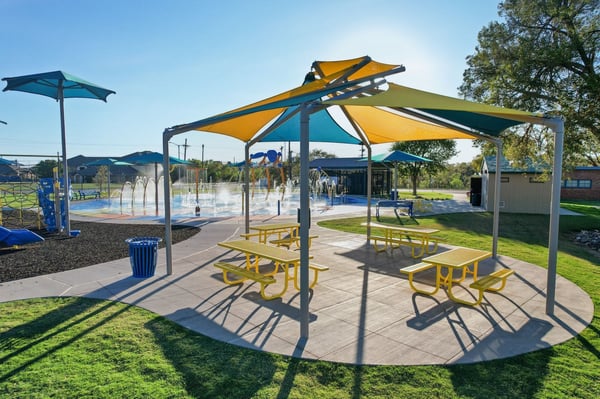
Kraftsman designs shade structures that extend playtime by protecting children from UV exposure while keeping equipment surfaces at safe temperatures.
Which Age Groups Will Use Your Playground?
Children at different developmental stages need different types of play experiences. A structure that challenges a 10-year-old may endanger a toddler, while equipment sized for preschoolers bores older children.
Toddlers (6 Months to 23 Months)
Toddlers benefit from low platforms, gentle slides, and sensory activities. Maximum fall heights for toddler equipment should not exceed 32 inches. Full bucket swing seats, crawl-through tunnels, and tactile panels support early motor development.
Preschoolers (2 to 5 Years)
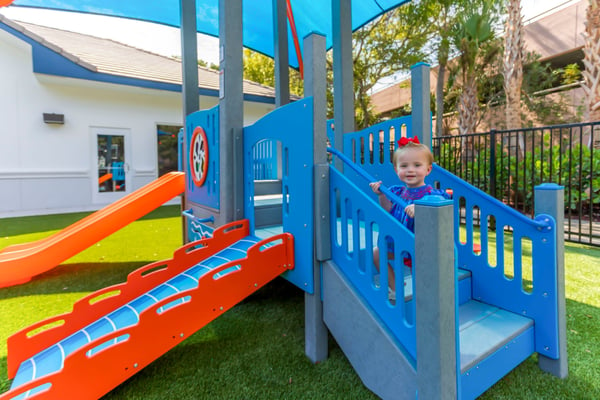
Preschool equipment includes balance beams no higher than 12 inches, spiral slides with one turn or less, and climbing structures that build confidence without overwhelming developing coordination. Design platforms and elevated surfaces for this age group to the guardrail and barrier thresholds in ASTM F1487; for preschool-age equipment, protective barriers are generally required once a platform is more than 30 inches above the surfacing.
School-Age Children (5 to 12 Years)
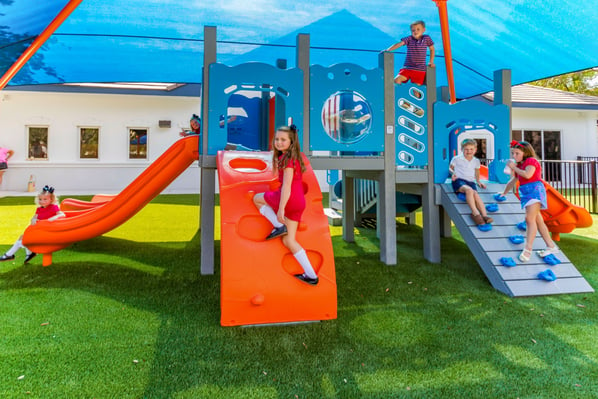
Older children seek physical challenges like overhead ladders, higher climbing walls, and longer slides.
Equipment for this age group can include taller climbing and play components, though the fall height must never exceed the critical height rating of your safety surfacing.
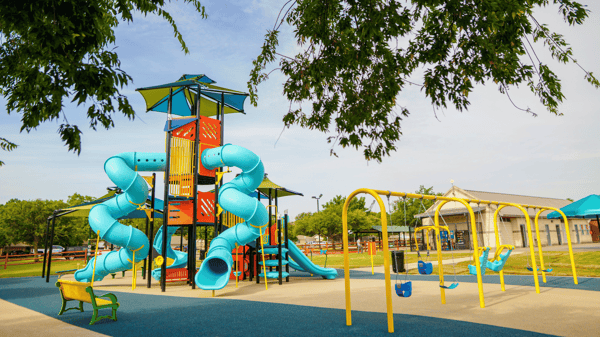
Separating Age Groups
When designing playgrounds that serve multiple age groups, separate distinct areas with buffer zones, landscaping, or site amenities like benches. This separation prevents older children from accidentally colliding with younger ones during active play.
Kraftsman can help design play use zones that align with your park’s audience, available space, and overall goals. By evaluating who will use the playground and how the site needs to function, our team can help create a layout that supports age-appropriate play, encourages exploration, and improves the overall visitor experience.
What Safety Standards Must Commercial Playground Equipment Meet?
Safety compliance protects children and shields your organization from liability. Every piece of commercial playground equipment should meet current voluntary standards.
ASTM F1487 Standard
The ASTM F1487 standard covers the design and performance requirements for public playground equipment. It addresses entrapment hazards, protrusion risks, platform heights, guardrail specifications, and dozens of other safety factors.
Manufacturers who build to ASTM F1487 test their equipment for head entrapment openings, crush and shear points, and adequate handrail heights. Ask any equipment supplier for documentation showing their products meet this standard.
CPSC Handbook Guidelines
The Consumer Product Safety Commission publishes the Public Playground Safety Handbook, which provides guidance that supplements ASTM standards. While not legally mandatory at the federal level, many states and municipalities require compliance with CPSC guidelines.
The handbook addresses equipment selection, layout, surfacing, and maintenance practices. It also provides detailed guidance on fall zones, age-appropriate design, and hazard identification.
ADA Accessibility Requirements
The Americans with Disabilities Act requires newly constructed playgrounds to meet specific accessibility standards. At least 50 percent of elevated play components must connect to an accessible route, and specific numbers of ground-level components must be accessible based on the total number of elevated components.
Under the 2010 ADA Standards for Accessible Design, accessible routes within play areas generally must be at least 60 inches wide, with a 36-inch minimum allowed in certain conditions, and running slopes no steeper than 1:16. Surfacing along these routes must meet ASTM F1951 standards for wheelchair maneuverability.
Kraftsman’s experienced team can help evaluate equipment options, review documentation, and plan site layouts that support safety and accessibility from the beginning of the project. By guiding customers through standards, surfacing considerations, fall zones, and accessible design requirements, we help you plan playgrounds designed to support compliance with applicable standards and well-suited to the communities they serve.
How Do You Choose the Right Safety Surfacing?
Protective surfacing reduces the severity of injuries when children fall from equipment. The CPSC identifies falls as the most common playground hazard pattern, making surfacing selection a critical safety decision.
Understanding Critical Height
Critical height refers to the maximum fall height from which a life-threatening head injury would not be expected to occur. Your surfacing must have a critical height rating equal to or greater than the fall height of your tallest equipment.
For example, if your highest platform stands at 8 feet, your surfacing must be rated for at least an 8-foot critical height.
Unitary Surfacing Options
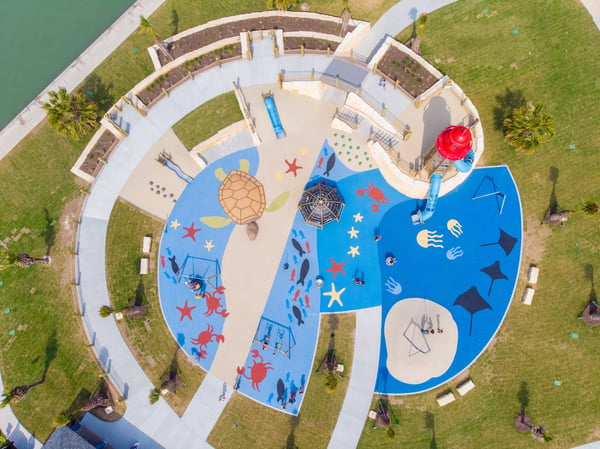
Poured-in-place rubber surfacing creates a continuous, seamless surface that meets both impact attenuation and accessibility standards. It requires minimal maintenance, does not displace like loose-fill materials, and can incorporate custom colors and designs.
Loose-Fill Surfacing Options
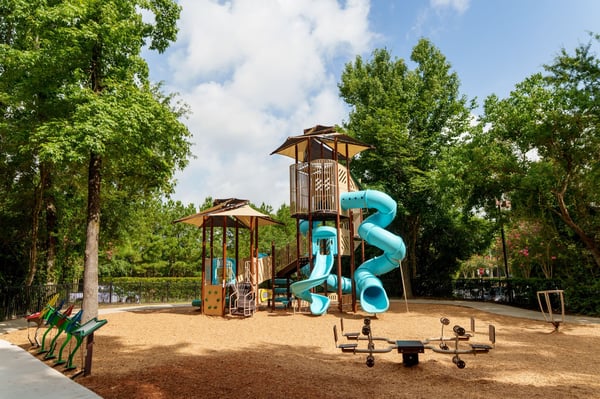
Engineered wood fiber meeting ASTM F2075 standards provides effective impact attenuation at lower initial costs than unitary options. However, it requires ongoing maintenance to maintain proper depth and may not meet accessibility requirements without additional measures.
Rubber mulch resists decomposition better than wood products and maintains consistent depth longer. It should meet ASTM F3012 standards for playground use.
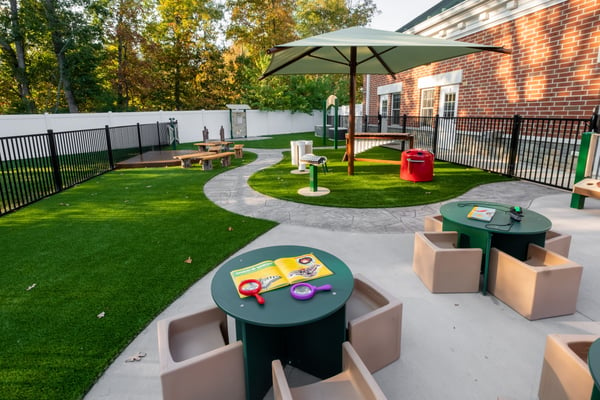
Kraftsman offers extensive surfacing options including poured-in-place rubber, engineered wood fiber, and synthetic turf, delivering safety, accessibility, and creative customization to match your project vision.
What Types of Play Components Should You Include?
Diverse play components address different developmental needs and keep children engaged over years of use. A well-designed playground includes opportunities for physical challenge, social interaction, sensory exploration, and imaginative play.
Climbing Equipment
Climbers build strength, coordination, and confidence. Options range from simple ladders and stairs to challenging rock walls, net climbers, and arch climbers. Match climbing difficulty to your target age group—arch climbers and flexible net structures suit school-age children but may frustrate preschoolers.

Slides
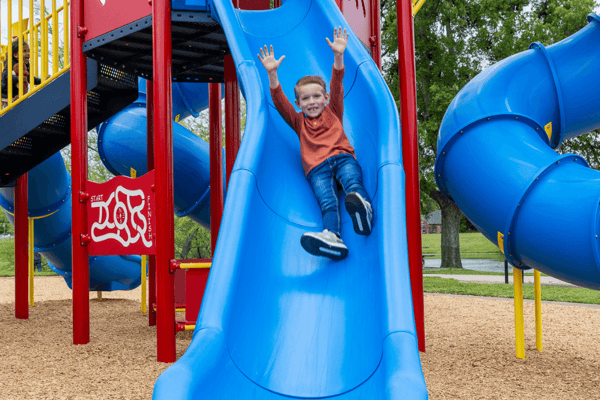
Slides remain the most popular playground feature for good reason. They teach children about gravity, speed, and spatial awareness while delivering pure fun. Consider including multiple slide types—straight, spiral, and tube slides each offer distinct experiences.
Position slides away from direct afternoon sun to prevent surface overheating. Metal slides in particular can cause burns during warm weather.
Swings
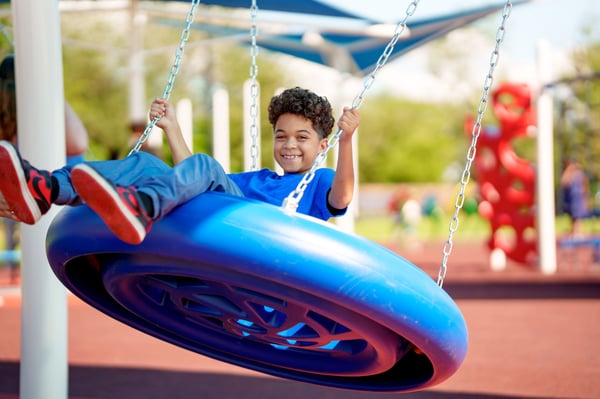
Swinging develops vestibular awareness—the sense of balance and body position in space. Include belt swings for independent swingers, full bucket seats for toddlers, and accessible swing seats for children with mobility challenges.
Swings require substantial use zones extending in front and behind. Single-axis swings need clearance equal to twice the vertical distance from pivot point to surfacing.
Spinning and Motion Equipment
Spinners, merry-go-rounds, and rotating platforms stimulate the vestibular system in ways that fixed equipment cannot. These elements encourage social play as children spin together.
Ensure any spinning equipment is designed to limit its rotational speed to the maximum allowed under ASTM F1487, which sets that limit by the equipment's diameter rather than a single fixed speed.

Inclusive Play Components
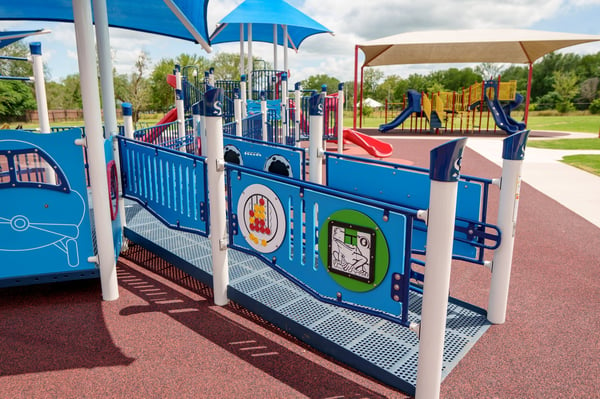
Children of all abilities deserve playgrounds where they can participate meaningfully. Ground-level sensory panels, wheelchair-accessible swings, and transfer platforms allow children using mobility devices to join their peers.
Kraftsman specializes in inclusive play solutions designed to support ADA accessibility requirements and welcome children of all abilities.
How Much Does Commercial Playground Equipment Cost?
Commercial playground costs can vary significantly from one project to the next. Factors such as playground size, equipment complexity, site conditions, surfacing, installation requirements, and additional amenities all influence the overall investment. Understanding these variables early in the planning process can help you develop a more realistic budget.
The "Per Child" Rule of Thumb
A common planning guideline is the "per child" rule, which estimates a conceptual budget based on the number of children the playground is designed to accommodate at one time. While this can be a helpful starting point during the early planning stages, it should not be used as a final budgeting method.
Actual project costs can vary greatly depending on the size of the playground, the number of play components, the complexity of the equipment, custom theming, inclusive play features, safety surfacing, site conditions, and the overall project scope.
Equipment Costs
Equipment costs are driven by the type and amount of play provided. A small neighborhood playground will require a different investment than a large community or destination playground with multiple structures, freestanding play elements, climbing features, swings, sensory experiences, and custom designs.
Playgrounds designed to serve multiple age groups or incorporate inclusive play features often require additional components and specialized equipment, increasing the overall project budget.
Surfacing Costs
Safety surfacing is one of the largest components of any playground project. The type of surfacing selected—such as poured-in-place rubber, engineered wood fiber, synthetic turf, or rubber mulch—affects both the initial investment and long-term maintenance requirements. The size of the play area, fall heights, accessibility goals, and local standards all play a role in determining surfacing costs.
Installation Costs
Professional installation ensures the playground is assembled correctly, installed according to manufacturer specifications, and meets applicable safety standards. Installation costs depend on the size and complexity of the project, equipment type, site accessibility, and the amount of surfacing being installed.
Site Preparation Costs
Every site is unique. Existing grades, drainage conditions, utilities, soil conditions, demolition of existing equipment, and accessibility improvements can all impact project costs. Some sites require minimal preparation, while others may need extensive grading, drainage improvements, retaining walls, or utility modifications before installation can begin.
Developing a realistic playground budget doesn't have to be overwhelming. Kraftsman works with municipalities, schools, HOAs, developers, and parks departments to evaluate project goals, identify priorities, and develop conceptual budgets that align with your vision and available funding.
What Hidden Costs Should You Anticipate?
Many playground projects exceed initial budgets because planners overlook costs beyond the equipment itself. Factor these expenses into your planning from the start.
Permitting and Engineering
Many playground projects require permits, plan reviews, or engineered drawings before construction can begin. Requirements vary by municipality and may depend on the size and complexity of the project, existing site conditions, and local building codes.
Kraftsman's experienced team helps identify permitting and engineering requirements early in the planning process, allowing clients to develop more accurate project timelines and budgets.
Freight and Delivery
Commercial playground equipment is manufactured, packaged, and shipped in multiple components. Freight and delivery costs can vary based on the size of the equipment package, shipping distance, project location, and site accessibility.
Our team coordinates logistics and delivery planning to help ensure materials arrive when needed and that transportation costs are considered as part of the overall project budget.
Border and Containment Systems
Many playground surfacing systems require borders or containment to define the play area and help maintain the integrity of the surfacing. The type of border selected depends on the surfacing system, site design, accessibility goals, and long-term maintenance preferences.
Kraftsman can recommend the most appropriate containment solution based on your project requirements while balancing durability, aesthetics, and maintenance needs.
Site Amenities
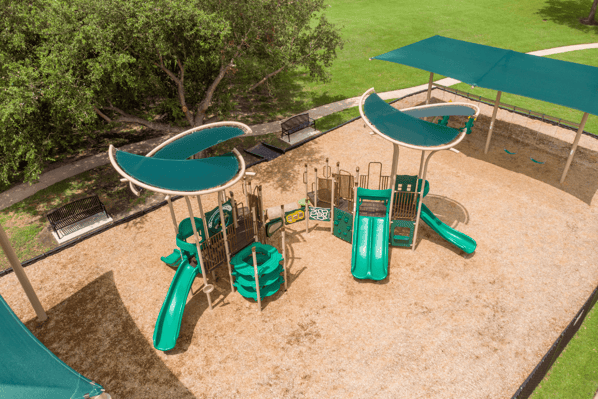
Benches, trash receptacles, bike racks, and signage complete your playground but add incremental costs. A comfortable playground environment for both children and caregivers requires these supporting elements.
Including these features during the planning stage provides a more complete understanding of the total project scope and helps maximize the value of your investment.
How Do You Navigate Purchasing and Procurement?
Public entities and many private organizations must follow specific procurement procedures. Understanding your options streamlines purchasing while ensuring compliance.
Cooperative Purchasing Contracts
Purchasing cooperatives like BuyBoard and Sourcewell allow qualified organizations to buy equipment without lengthy competitive bidding processes. Manufacturers and suppliers who hold cooperative contracts have already competed on price and quality, saving you procurement time.
Request for Proposal Process
Formal RFPs ensure fair competition but require clear specifications. Define your age ranges, capacity needs, accessibility requirements, and desired play experiences. Vague RFPs produce proposals that are difficult to compare fairly.
Grant Funding
Federal, state, and private grants fund playground projects for schools, parks, and community organizations. Grant applications require detailed budgets, timelines, and community benefit statements. Start grant research early—application deadlines often fall six to twelve months before funding availability.
Navigating the purchasing process doesn't have to be overwhelming. Kraftsman's experienced team works alongside clients throughout every stage of project planning and procurement. We can help identify cooperative purchasing options, assist with developing project specifications, provide conceptual budgets and supporting documentation for grant applications, and offer guidance during the RFP process to help ensure your project goals are clearly defined.
Why Does Professional Installation Matter?
Proper installation protects both safety and investment. Incorrectly installed equipment can void warranties, create hazards, and fail prematurely.
Professional Installer Benefits
Proper installation follows manufacturer specifications, safety standards, and local code requirements, with attention to the details that matter most, including footing depth, hardware torque, and use zone clearances.
Kraftsman manages installation to manufacturer specifications and recognized industry standards, and our team includes Certified Playground Safety Inspectors (CPSIs) and, for aquatic facilities, Aquatic Facility Operators (AFOs). We recommend a Certified Playground Safety Inspector inspect the finished playground before it opens.
Installation Timeline Expectations
Installation timelines vary from project to project and depend on several factors, including the size and complexity of the playground, the type of safety surfacing selected, site accessibility, weather conditions, permitting requirements, and overall site readiness.
Projects with extensive site preparation, custom features, inclusive play elements, or additional amenities may require more coordination than straightforward installations. Planning ahead and accounting for these variables can help keep your project on schedule.
Kraftsman's experienced project management and installation teams work closely with clients throughout the process to establish realistic timelines, coordinate materials and construction activities, and proactively address potential challenges. From planning through final installation, our turnkey approach streamlines your playground project so that it is completed as efficiently and seamlessly as possible.
Post-Installation Inspection
Before opening your playground to children, conduct a thorough inspection. Check all hardware for tightness, verify surfacing depth meets specifications, and confirm use zones remain clear of obstacles.
Kraftsman's installation teams follow manufacturer specifications and perform workmanship quality checks throughout installation as part of our standard process. We recommend a Certified Playground Safety Inspector inspect the finished playground before it opens.
How Do You Plan for Ongoing Maintenance?
Playgrounds require regular inspection and maintenance to remain safe. Establish maintenance protocols before your playground opens.
Routine Inspection Schedule
Conduct visual inspections before each period of use at high-traffic locations like schools and childcare centers. Weekly inspections suit community parks with moderate use. Document all inspections and any issues discovered.
Common Maintenance Tasks
Tighten loose hardware, replace worn swing seats and chains, replenish displaced loose-fill surfacing, and remove debris from equipment. Address vandalism promptly to discourage repeat incidents.
Surfacing Maintenance
Loose-fill materials displace under swings and at slide exits. Rake surfacing back into high-use areas regularly. Check depth monthly and add material as needed to maintain proper fall protection.
Unitary surfacing requires less frequent attention but benefits from regular cleaning and inspection for tears, holes, or delamination.
Kraftsman offers professional maintenance and certified aquatic services to keep facilities operational year after year, protecting your investment and ensuring ongoing safety compliance.
What Questions Should You Ask Equipment Suppliers?
Choosing the right playground supplier is about more than selecting quality equipment—it's about finding a trusted partner who can guide your project from planning through installation and beyond. Asking the right questions can help you evaluate both the products and the level of support you'll receive throughout the life of your playground.
Product Quality Questions
Ask about the materials used in the playground's posts, decks, hardware, and play components. Request documentation demonstrating compliance with applicable safety standards, and inquire about warranty coverage for structural components, plastics, finishes, and moving parts, as warranty terms may vary by component.
Kraftsman partners with industry-leading manufacturers that design durable, commercial-grade playground equipment built to withstand years of active use while meeting recognized safety and quality standards.
Service Capability Questions
Determine whether the supplier handles design, installation, and ongoing service or if you must coordinate multiple vendors. Ask about their experience with projects similar to yours in size and setting.
As a turnkey provider, Kraftsman manages every phase of the project—from conceptual planning and design to installation and project completion—providing a single point of contact throughout the process.
Support and Training Questions
Quality suppliers provide maintenance guides, inspection checklists, and training for your staff. Ask what resources come with your purchase and whether ongoing support is available.
Kraftsman's commitment doesn't end when construction is complete. Our team provides clients with guidance on playground care and maintenance, answers questions after installation, and remains available to support future expansions, repairs, replacement components, and ongoing service needs.
How Do Urban Sites Differ from Park Installations?
Urban playground projects face unique constraints that affect equipment selection and installation planning.
Space Constraints
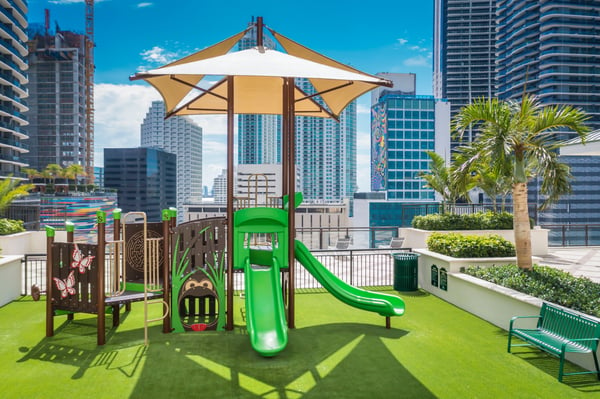
Urban sites often have limited footprints with existing infrastructure that cannot move. Compact play structures designed for small spaces maximize play value per square foot. Vertical elements like climbing towers make efficient use of limited ground area.
Access Challenges
Delivery trucks may face narrow streets, low overhangs, or weight-restricted routes. Discuss site access with your supplier early to identify potential obstacles and plan appropriate logistics.
Security Considerations
Urban playgrounds may experience higher vandalism rates. Choose tamper-resistant fasteners, specify graffiti-resistant coatings, and design sightlines that support natural surveillance from surrounding areas.
Kraftsman's experienced design and project management teams understand the unique considerations of both urban and park playground projects. From evaluating site constraints and recommending space-efficient play solutions to coordinating logistics, installation, and site amenities, we help clients develop designs that maximize play value while addressing the realities of each location.
What Special Considerations Apply to School Playgrounds?
School settings carry distinct requirements that shape playground design and selection.
Curriculum Integration
Playgrounds can support learning through activity panels, musical elements, and imaginative play structures. Consider how equipment might reinforce classroom concepts in physical education, science, or social studies.
Supervision Requirements
School playgrounds need clear sightlines that allow staff to monitor all children simultaneously. Avoid equipment layouts that create hidden areas. Position equipment to minimize conflict between active play zones and quieter areas.
Capacity Planning
Schools release entire classes for recess simultaneously. Size your playground for expected simultaneous users, not enrollment numbers. A playground designed for thirty children cannot safely serve multiple classes totaling ninety students.
Kraftsman has extensive experience partnering with school districts, private schools, and educational organizations to design playgrounds that meet the unique needs of students and staff. Our team works closely with educators and administrators to understand curriculum goals, age groups, supervision requirements, accessibility objectives, and available space. From conceptual planning and budgeting to equipment selection, safety surfacing, installation, and project management, Kraftsman provides turnkey solutions that help schools create engaging outdoor environments where students can learn, play, and thrive.
How Do You Plan Playgrounds for Multifamily Developments?
Apartment communities and residential developments use playgrounds as amenities that attract and retain families.
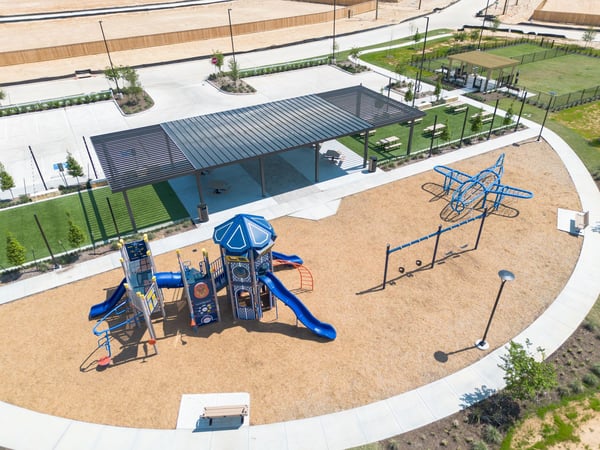
Resident Age Distribution
Research the typical age distribution of families in your target market. Family-focused properties need equipment spanning toddler through school-age ranges. Communities marketed to young professionals may prioritize adult fitness stations over extensive children's equipment.
Maintenance Responsibility
Property management must commit to ongoing maintenance. Factor inspection and repair costs into operating budgets. Deferred maintenance creates liability exposure and diminishes property appeal.
Noise and Location
Position playgrounds away from bedroom windows to minimize noise complaints. Buffer zones with landscaping reduce sound transmission while creating attractive transitions between play areas and residential buildings.
Kraftsman partners with apartment communities, developers, property managers, and homeowners associations to create outdoor amenities that enhance property value and resident satisfaction. Our experienced team helps evaluate available space, resident demographics, community goals, and budget to recommend the right mix of playground equipment, shade structures, safety surfacing, site furnishings, fitness equipment, and other amenities.
In Conclusion: Making Your Playground Vision a Reality
Selecting commercial playground equipment requires balancing safety, budget, site constraints, and community needs. Start with thorough site assessment and clear understanding of who will use your playground. Verify all equipment meets current ASTM and CPSC standards. Budget comprehensively, accounting for surfacing, installation, and site preparation alongside equipment costs.
Partner with suppliers who offer comprehensive support from design through installation and ongoing maintenance. Kraftsman delivers turnkey playground solutions across Texas, Oklahoma, and Louisiana, with in-house design and construction services, certified safety inspectors, and professional maintenance programs that protect your investment for years to come.
Your community deserves a playground that welcomes every child, withstands years of active play, and becomes a gathering place where families create lasting memories. With careful planning and the right partner, that vision becomes reality.
FAQs About How to Choose Commercial Playground Equipment in 2026
How long does commercial playground equipment typically last?
With proper maintenance, quality commercial playground equipment commonly provides many years of service, though actual service life varies with use, climate, and upkeep. Manufacturers often warrant steel posts and core structural components for fifteen years or more on their own terms. Kraftsman works with manufacturers who look for durable, commercial-grade materials and finishes built for demanding outdoor environments.
What is the difference between ADA compliance and inclusive design?
ADA compliance meets minimum legal accessibility requirements, including accessible routes and specific numbers of ground-level components. Inclusive design goes beyond minimums to create play experiences where children of all abilities can participate together.
Kraftsman specializes in inclusive play solutions designed to support ADA accessibility requirements and welcome children of all abilities.
Can existing playground equipment be upgraded rather than fully replaced?
Many existing playgrounds can receive component upgrades, new surfacing, or additional features without complete replacement. However, equipment older than fifteen years may not meet current safety standards and often benefits from replacement. A Certified Playground Safety Inspector can assess your existing equipment and recommend appropriate approaches.
How do weather conditions affect playground material choices?
Hot climates require materials that resist heat buildup—avoid bare metal slides in full sun. Coastal areas need corrosion-resistant hardware and marine-grade finishes. Cold climates should consider freeze-thaw effects on surfacing materials. Kraftsman recommends materials suited to your specific regional conditions.
What surfacing works best for playgrounds in flood-prone areas?
Poured-in-place rubber and rubber tiles drain quickly and resist flood damage better than loose-fill materials. Wood fiber surfacing can float away during flooding and requires replacement. Evaluate your site's drainage characteristics and flood history when selecting surfacing materials.
How do you determine appropriate play capacity for a playground?
Calculate capacity by considering how many children will use the playground simultaneously during peak times. Schools should plan for multiple classes at recess. Parks should consider neighborhood population and nearby facilities. Kraftsman helps clients analyze usage patterns to right-size equipment investments.
Disclaimer:
This article is general information and is not intended to be legal, engineering, or safety-inspection advice, and is current as of its publication date. Safety standards and accessibility requirements change and vary by jurisdiction. Verify current ASTM, CPSC standards, and ADA requirements for your project, and have equipment inspected by a Certified Playground Safety Inspector. Product warranties are provided by the manufacturer on the manufacturer's terms.
Building Spaces That Bring Communities Together
Let's Partner Together
For more than 45 years, Kraftsman has partnered with municipalities, schools, developers, and parks departments to create memorable recreation experiences that inspire connection and strengthen communities.
Whether you're planning a new park, upgrading an existing playground, or exploring splash pad opportunities, our team is ready to help bring your vision to life. Together, we can create destinations where families gather, children thrive, and communities grow stronger—one park at a time.