Commercial playground equipment planning for an HOA or new housing development starts with one fundamental question: how do you create a safe, engaging play space on a constrained lot? Unlike municipal parks with acres of open land, HOA communities and developer amenity areas demand precision. Every decision, from equipment selection to surfacing material, needs to align with space limits, resident expectations, and regulatory standards. This guide walks you through each step of that process so you can move from concept to ribbon cutting with confidence. Kraftsman supports HOA boards and developers through turnkey commercial playground equipment planning, design, installation, and long-term care across Texas and beyond.
Key Takeaways: The Complete Guide to HOA Playground Planning
- Tight site playground planning for HOA communities requires careful space analysis, equipment selection, and compliance with ASTM and CPSC standards.
- A realistic budget accounts for equipment, safety surfacing, installation, site preparation, wheelchair-accessible pathways, and ongoing maintenance costs.
- Kraftsman delivers turnkey commercial playground services from initial concept through design, permitting, installation, and long-term support.
- ADA-compliant and inclusive play equipment ensures children of all abilities can participate together in your community playground.
- Purchasing cooperatives and playground grants help HOAs and developers secure funding efficiently while maintaining quality standards.
Why HOA Playground Planning Requires a Different Approach
Planning a playground for a homeowners association or new housing development differs significantly from building a municipal park. HOA sites typically feature smaller footprints, restrictive lot lines, and close proximity to residences. These constraints mean every square foot of your playground area must serve a purpose.
Tight site conditions also affect how you manage use zones, sight lines, and noise levels. Residents live steps away from the play area, so your design needs to balance active play with neighborhood harmony. This is where working with an experienced turnkey partner makes a meaningful difference.
Kraftsman helps developers and HOA boards plan commercial playground equipment for constrained spaces by handling design, permitting, installation, and ongoing maintenance from a single point of contact. That integrated approach reduces communication gaps and keeps projects moving on schedule.
.jpg?width=600&height=338&name=Hunters%20Run-NM-Playgrounds-PS5-73173-View%2006%20(1).jpg)
How to Assess Your Site Before Selecting Equipment
Measuring Available Space and Use Zones
Start by mapping the total available area and identifying any setback requirements from property lines, fences, or buildings. Every piece of commercial playground equipment requires a designated use zone, the area around the structure where a child could fall or dismount.
Use zones cannot overlap with fixed objects like retaining walls, trees, or utility covers. For tight sites, measure in three dimensions because changes in grade or drainage swales can reduce usable flat space significantly.
Evaluating Drainage, Utilities, and Access Points
Underground utilities such as water, gas, and electrical lines can derail a project if discovered after equipment is ordered. Request a utility locate survey early in the planning phase. Drainage is equally important because standing water degrades surfacing materials and creates slip hazards.
Access points matter too. Children, parents, and maintenance crews all need clear paths. Plan at least two entry points when possible, and ensure at least one provides a wheelchair accessible route to the play area.
Understanding Sight Lines for Supervision
Parents and caregivers need to see children from multiple vantage points. Avoid placing tall structures or solid fences where they block visual access. Open design elements, such as mesh panels and low borders, keep the playground feeling connected to the surrounding neighborhood.
What to Include in Your HOA Playground Budget
Equipment Costs
Commercial playground structures for HOA communities range widely depending on age groups served, capacity, and features. A focused play system for ages 2 to 5 looks very different from one targeting 5 to 12. Multi-generational play areas that include fitness stations or gathering spaces add additional investment.
Work with Kraftsman to select age-appropriate equipment that matches community demographics. Kraftsman offers structures in steel and recycled materials, each engineered for long-term durability and high-traffic daily use.
Safety Surfacing Investment
Surfacing often accounts for a substantial portion of the total budget. Options include engineered wood fiber, bonded shredded rubber, synthetic turf, and poured-in-place rubber. Each material carries different costs for installation, maintenance, and longevity.
Poured-in-place rubber provides a smooth, wheelchair accessible surface with minimal upkeep, while engineered wood fiber offers a lower upfront cost but requires periodic replenishment. Your choice should account for climate, use intensity, and long-term maintenance capacity.
Installation, Site Prep, and Hidden Costs
Beyond equipment and surfacing, plan for concrete footings, grading, wheelchair accessible pathways, shade structures, borders, ramps, and seating. Permitting fees, freight delivery, and insurance should also be included in your budget from day one.
Kraftsman handles all installation-related construction, including concrete, electrical, and plumbing, which prevents unexpected change orders from multiple subcontractors.
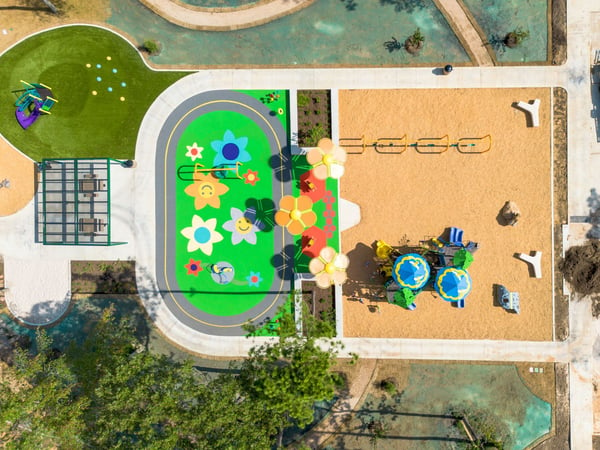
How to Design Space-Efficient Playgrounds for Tight Urban Sites
Vertical Play Elements to Maximize Footprint
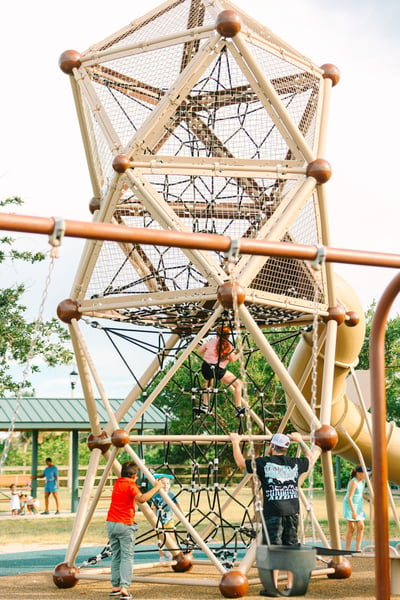
When horizontal space is limited, building upward is your greatest asset. Multi-level play structures, climbing towers, and rope net configurations allow children to explore multiple levels of challenge in a compact footprint.
Vertical elements also create visual interest and give the playground a sense of scale without requiring additional ground area. Combined with ground-level sensory panels and independent play components, they produce a diverse play experience in a fraction of the space.
Overlapping Age Zones with Careful Buffer Design
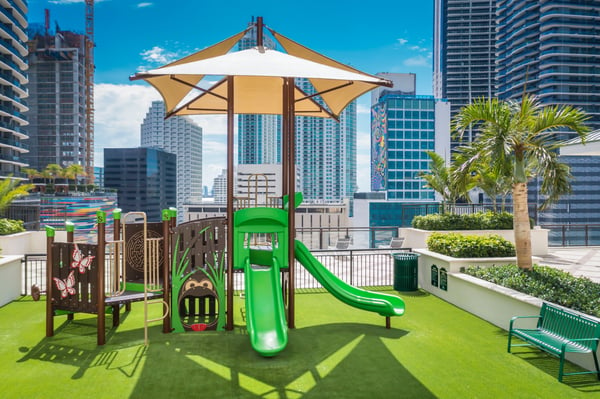
In larger parks, toddler areas and school-age zones sit in completely separate locations. On tight HOA sites, these areas can share borders if you use low fences, grade changes, or landscaping to create visual separation.
Keep the toddler zone closest to seating areas so caregivers can reach young children quickly. Older children generally need less direct supervision and benefit from slightly more adventurous positioning. This layout strategy uses space efficiently while maintaining safety for all age groups.
Independent Play Components That Fit Small Gaps
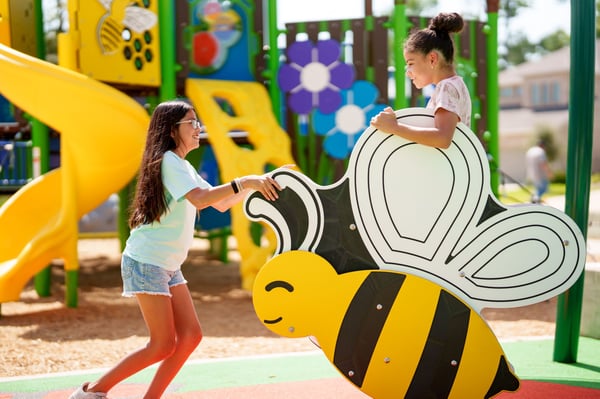
Standalone components like spring riders, spinning elements, musical instruments, and balance beams slot into leftover spaces between larger structures. They add play value for children waiting their turn and help avoid bottlenecks on the main structure.
Safety Standards and Compliance for HOA Playgrounds
ASTM F1487 and CPSC Guidelines
All commercial playground equipment installed in public-use settings, including HOA community areas, must comply with ASTM F1487. This standard covers structural integrity, entrapment prevention, fall height limits, and use-zone dimensions. The U.S. Consumer Product Safety Commission (CPSC) publishes a Public Playground Safety Handbook that serves as a reference for owners and operators.
The handbook was updated in 2025 with refined guidance on entrapment openings, surfacing depth requirements, and equipment spacing. Staying current with these revisions protects your HOA from liability and ensures a safe environment for residents.
ADA Accessibility Requirements
The Americans with Disabilities Act requires that playgrounds include accessible routes to play components and that a specified percentage of ground-level and elevated elements are accessible. This includes transfer platforms, ramps, and ground-level play activities that accommodate children using mobility devices.
Kraftsman designs inclusive, barrier-free play spaces with ramps, wide movement routes, sensory panels, and adaptive swings that ensure no child is excluded from the play experience.
Working with Certified Playground Safety Inspectors
Before your playground opens to residents, a Certified Playground Safety Inspector (CPSI) should audit the installation against current industry standards. Kraftsman employs certified inspectors on staff who can evaluate your equipment, identify any non-compliant conditions, and verify that surfacing meets impact-attenuation requirements.
How to Fund Your HOA Playground Project
Purchasing Cooperatives for Cost Savings
HOAs, municipalities, schools, and developers can access pre-negotiated pricing through purchasing cooperatives like BuyBoard, HGACBuy, NASPO ValuePoint, and GSA Advantage. These contracts save time and money by eliminating the need for individual competitive bids while maintaining compliance with procurement regulations.
Kraftsman holds active contracts with BuyBoard, giving your HOA direct access to discounted equipment pricing and a streamlined procurement experience.
Playground Grants and Fundraising Strategies
Many charitable organizations and state programs offer grants specifically for playground construction. Kraftsman offers a free Playgrounds Grant and Stimulus Guide that lists funding opportunities by state, including award amounts, eligibility requirements, and application deadlines.
Matching grants are common, so pairing a grant application with community fundraising efforts strengthens your proposal and demonstrates neighborhood support. A well-prepared proposal with renderings, budgets, and community impact data significantly increases approval odds.
Equipment Financing Options
For HOAs and private organizations that do not qualify for public grants, equipment financing allows you to spread project costs over time. This approach keeps community reserve funds intact while still delivering a quality play space on schedule.
What Makes a Turnkey Playground Partner Valuable for Developers
Single Point of Contact from Concept to Completion
Developers managing multiple phases of a housing project cannot afford to coordinate between separate design firms, equipment vendors, contractors, and inspectors. A turnkey playground partner consolidates all of these roles into one relationship.
Kraftsman manages the full project lifecycle, from initial site consultation and custom design through permitting, installation, and post-installation support. This reduces scheduling conflicts and ensures accountability for the entire scope of work.
In-House Design and Construction Capabilities
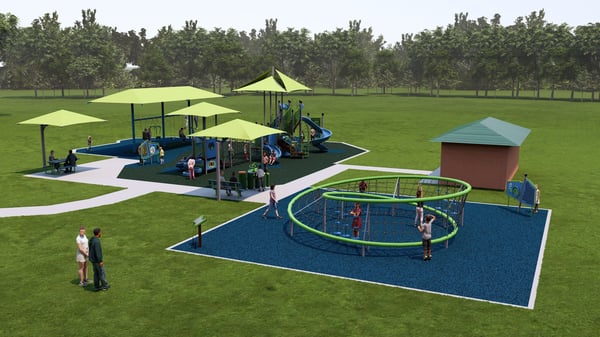
Having design and construction under one roof means your playground plan accounts for real-world installation requirements from day one. There is no disconnect between what the rendering shows and what the construction crew can execute on your lot.
Kraftsman offers in-house capabilities for concrete, electrical, plumbing, mechanical work, and surface refinishing. This eliminates the finger-pointing that often occurs when multiple subcontractors share a tight site.
Post-Installation Maintenance and Inspections
Your community's playground will need ongoing care after the ribbon cutting. Regular inspections catch wear before it becomes a safety hazard. Surfacing needs periodic assessment, hardware requires tightening, and moving parts like swings and spinners have defined service intervals.
Kraftsman offers professional maintenance services, certified inspections, and upgrade support for the life of your playground. This long-term partnership protects your HOA's investment and keeps residents satisfied year after year.
How to Manage Your HOA Playground Project Timeline
Planning and Design Phase
Allow two to six weeks for initial consultations, site analysis, design iterations, and community board approvals. HOA boards typically require a formal presentation with renderings, budgets, and timelines before approving capital expenditures.
Starting this phase early gives you flexibility to incorporate feedback and make adjustments without compressing the construction schedule later.
Equipment Manufacturing and Delivery
Custom commercial playground equipment is manufactured after the design has been finalized and approved. Manufacturing, shipping, and delivery timelines vary based on project complexity, seasonal demand, and manufacturer production schedules. Be sure to discuss anticipated lead times with your playground partner early in the planning process to keep your project on schedule.
Kraftsman receives equipment at their warehouse and coordinates delivery to your site on a schedule that aligns with site-prep completion.
Installation and Final Inspection
Installation duration depends on project size, complexity, and site conditions. Straightforward HOA playgrounds typically install in a couple of weeks. Weather and soil conditions can extend timelines, so build buffer days into your plan.
Once installation is complete, schedule a CPSI audit and final walkthrough before opening the playground to residents. This step confirms compliance and gives your HOA board documentation for their records.
How to Select Age-Appropriate Equipment for Your Community
Equipment for Ages 2 to 5
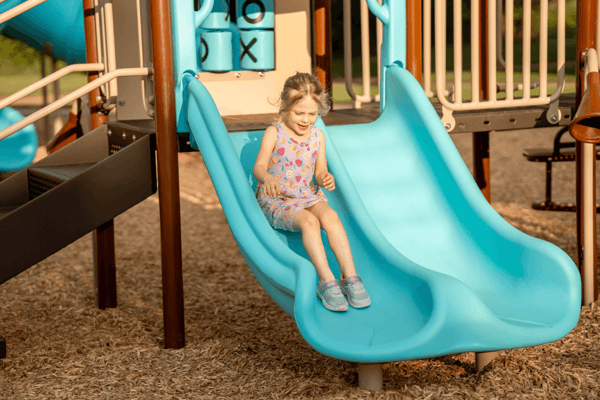
Toddler play structures focus on low deck heights, enclosed slides, and developmentally appropriate climbing steps. These components build confidence and motor skills without introducing fall risks that exceed what young children can manage.
Ground-level sensory panels, tactile surfaces, and interactive sound features engage toddlers who are not yet ready for elevated play. These elements are also naturally inclusive for children with mobility limitations.
Equipment for Ages 5 to 12
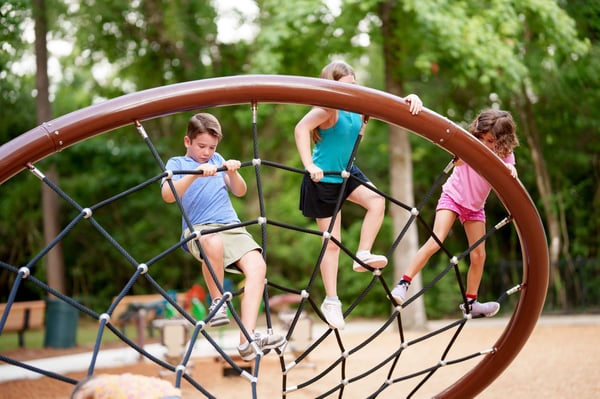
School-age children need higher challenge levels, including taller slides, overhead climbers, monkey bars, and rope net configurations. Multi-level structures with multiple access points keep older children engaged and encourage physical activity.
According to a 2025 systematic review published in the International Journal of Behavioral Nutrition and Physical Activity, physically enriched school play environments contribute to increased movement behaviors and developmental outcomes in children. Adding fitness components or outdoor musical instruments near the playground can attract pre-teens who may otherwise lose interest in traditional play structures.
Multi-Generational Gathering Spaces
A well-designed community playground includes more than equipment for children. Benches, picnic tables, shade structures, and gathering pavilions turn a playground visit into a family experience.
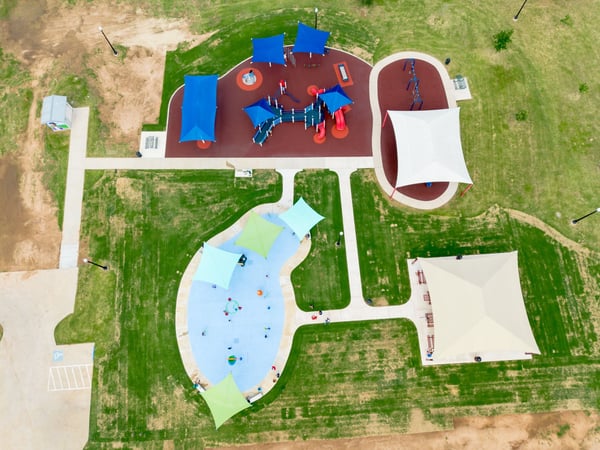
Shade structures protect against UV exposure and extend the time families spend outdoors during hot Texas summers. Kraftsman offers fabric shade solutions and shelters that complement playground equipment and create comfortable spaces for caregivers.
Long-Term Maintenance Planning for HOA Playgrounds
Establishing Inspection Schedules
Two types of inspections keep your playground safe. High-frequency inspections happen weekly and cover changing conditions like surfacing levels, trash, and vandalism. Low-frequency inspections happen quarterly or semi-annually and involve in-depth evaluation of structural components, hardware, and wear patterns.
Document every inspection and repair. These records support warranty claims, inform future budget requests, and demonstrate your HOA's commitment to resident safety.
Budgeting for Ongoing Upkeep
Set aside annual maintenance funds for surfacing replenishment, hardware replacement, and painting or refinishing. Proactive maintenance extends equipment life and prevents costly emergency repairs that disrupt service to your community.
Kraftsman's maintenance team can perform scheduled service visits so your HOA board does not need to manage upkeep internally. This approach keeps your playground safe and attractive while freeing up volunteer board members for other responsibilities.
Planning for Future Upgrades and Expansions
Communities grow and change. Children age out of toddler equipment, and new families move in with different needs. Leave room in your master plan for future additions, such as expanded age zones, splash pad features, or fitness equipment.
Kraftsman supports communities through the entire life of their play spaces, including park upgrades and equipment additions as your neighborhood evolves.
In Conclusion: How to Start Your HOA Playground Project
Planning commercial playground equipment for a new housing development or HOA amenity involves balancing tight site constraints, resident expectations, safety requirements, and budget realities. The right approach starts with careful site analysis, moves through informed equipment selection, and ends with a long-term maintenance plan that protects your investment.
Kraftsman brings over 40 years of experience to playground projects across Texas, serving as your single point of contact from concept through completion. If your HOA or development is ready to start planning, reach out to the Kraftsman team to begin your consultation and move one step closer to a play space your community will enjoy for decades.
Building Spaces That Bring Communities Together
Let's Partner Together
For more than 45 years, Kraftsman has partnered with municipalities, schools, developers, and parks departments to create memorable recreation experiences that inspire connection and strengthen communities.
Whether you're planning a new park, upgrading an existing playground, or exploring splash pad opportunities, our team is ready to help bring your vision to life. Together, we can create destinations where families gather, children thrive, and communities grow stronger—one park at a time.