When a child visits a playground in a wheelchair and cannot reach a single piece of equipment, that space has failed its purpose. Inclusive playground design goes beyond meeting minimum code requirements. It creates a place where children of all physical, sensory, and cognitive abilities play side by side.
Kraftsman builds inclusive playgrounds that pair ADA-compliant materials, adaptive equipment, and sensory-rich features into spaces your community will rely on for years. Below, you will find ten design factors that separate a truly accessible playground from one that only checks a compliance box.

Key Takeaways
- Accessible surfacing and pathways are the foundation of any inclusive playground project.
- Sensory play elements engage children with cognitive, visual, and auditory processing differences.
- Adaptive equipment like ramped structures and supportive swings removes mobility barriers.
- Kraftsman designs inclusive playgrounds with wheelchair-accessible features built for long-term durability.
- Shade, seating, and quiet zones support caregivers and children who need a break from stimulation.
Design Factors That Make Inclusive Playgrounds Accessible for All Abilities
1. Accessible Surfacing that Supports Mobility and Safety
The ground beneath your playground determines who can use it. Loose materials like pea gravel or sand create real barriers for children using wheelchairs, walkers, or leg braces.
Wheelchair-accessible options like poured-in-place rubber and engineered wood fiber offer a firm, stable surface that absorbs impact and allows smooth navigation. These materials reduce fall-related injuries while keeping the space open to children of all physical abilities.
Safety surfacing also affects long-term maintenance costs. Durable surfaces resist weather damage and heavy foot traffic, keeping your playground safe and functional year after year.

2. Connected Pathways and Ramps for Independent Navigation
A truly accessible playground connects every play zone with wide, smooth pathways. If your site funnels children using mobility devices through a separate or isolated entrance, those children are excluded before they even start playing.
Barrier-free ramps and borders offer gentle transitions between ground-level areas and elevated structures. This design choice means a child in a wheelchair can reach a slide platform or climbing deck alongside peers.
Pathway width matters, too. Routes should be wide enough for two wheelchairs to pass comfortably or for a caregiver to walk beside a child using a walker.

3. Sensory Play Elements for Cognitive and Development Engagement
Children on the autism spectrum or with sensory processing differences benefit from play components that engage touch, sound, and sight in controlled ways.
Textured panels, musical instruments, spinning gears, and interactive sound features invite exploration and help build fine motor skills. Sensory play equipment also supports pattern recognition, creativity, and emotional regulation through hands-on discovery.
These elements are most effective when placed at ground level, so children of varying physical abilities can reach them without needing to climb or transfer from a mobility device.

4. Adaptive Swings and Play Structures that Remove Barriers
Standard bucket swings and narrow climbing ladders can exclude children with limited trunk control or lower-body mobility. Adaptive alternatives solve this by offering supportive harness seats, high-back molded swings, and ramped entry points.
Kraftsman builds inclusive play structures with wide movement routes, transfer platforms, and equipment designed for all abilities. Each piece uses powder-coated steel frames and UV-stabilized components so the equipment holds up in harsh outdoor conditions.
The goal is not to create a separate "accessible section" but to integrate adaptive features throughout the entire space.

5. Social Play Zones That Encourage Interaction Across Abilities
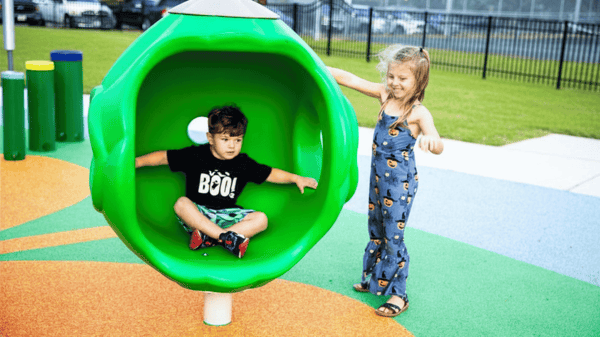
Play is social by nature. Your playground should bring children together, not separate them by ability level. Group-oriented equipment like large platform seesaws, cooperative spinning structures, and multi-rider swings lets children play alongside one another.
Face-to-face play layouts are especially important. When children can see and interact with each other during play, they build empathy, communication skills, and friendships that cross ability lines.

6. Quiet Retreats and Solitary Play Spaces
Not every child thrives in high-energy environments. Some children need a calm space to regroup when the playground becomes overwhelming. Including quiet zones with individual play panels, enclosed dens, or shaded nooks gives children a retreat option.
These areas support children with autism, anxiety, or sensory overload. They also give caregivers a nearby place to sit while keeping their child in view.
Themed play areas that incorporate calming colors and lower-stimulation activities can double as quiet retreats while still encouraging exploration.
7. Shade Structures and Caregiver Comfort
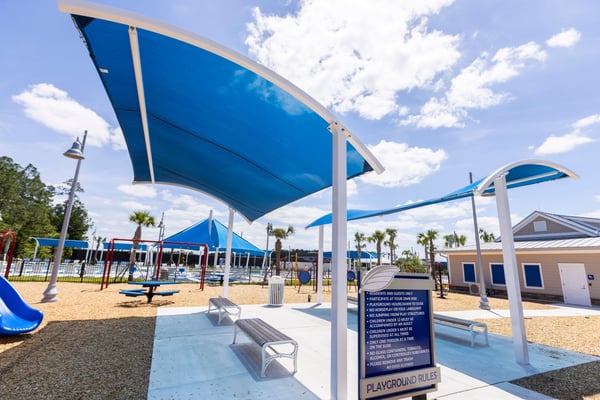
An inclusive playground is not just for children. Caregivers, grandparents, and parents with mobility challenges need comfortable, shaded areas where they can rest and supervise play.
Shade structures protect visitors from UV exposure and heat, which is especially critical for individuals with temperature-regulation difficulties. Covered seating near play zones ensures caregivers stay connected to the action.
Kraftsman offers custom shade and shelter solutions that pair UV-resistant materials with durable steel construction, built to withstand years of sun, wind, and rain.
8. Age Appropriate Zones for Developmental Variety
Children develop at different rates, and inclusive design accounts for this by offering age-segmented play areas. Toddlers and preschool-age children need lower structures, enclosed slides, and softer surfaces, while older children benefit from climbing challenges and higher platforms.
A playground that separates age zones clearly, using signage, color-coded surfaces, or distinct equipment clusters, helps parents choose the right area for their child. It also reduces the risk of collisions between younger and older users.
Kraftsman works with municipalities and schools to design commercial playgrounds with distinct developmental zones tailored to each community's needs.

9. Signage, Wayfinding, and Communication Supports
Visual cues help children and families navigate the space confidently. Clear signage with pictograms, Braille, and high-contrast text guides users through the playground and explain how to use each piece of equipment.
Wayfinding elements are especially helpful for children with cognitive disabilities or visual impairments. Color-coded paths, tactile ground indicators, and consistent visual markers reduce confusion and increase independence.
According to an NRPA Park Pulse survey, 88 percent of Americans believe communities should offer inclusive play options for people of all abilities, reinforcing the demand for well-designed, clearly marked play spaces.

10. Turnkey Project Delivery for Lasting Results
Designing an inclusive playground is only the first step. Proper installation and ongoing maintenance determine whether the space continues to serve every child over time.
Kraftsman handles the full project lifecycle: consultation, design, construction, commissioning, and post-installation support. Did you know that we can turnkey your project? Your playground is built to ADA standards, inspected by certified playground safety inspectors, and maintained with professional upgrade services as your needs evolve.
Having a single partner manage every phase reduces miscommunication and compliance gaps. Explore completed inclusive projects to see how Kraftsman has brought these principles to life across Texas and beyond.

Building Places That Welcome Every Child
An accessible playground goes far beyond meeting minimum ADA requirements. It is a space where children of all abilities play together, build friendships, and develop confidence in a welcoming environment.
The design choices covered here, from surfacing and ramps to sensory elements and shade, all work together to remove barriers and invite participation. Each decision sends a message to your community: every child matters here.
Kraftsman designs and builds inclusive playgrounds with durable materials, ADA-compliant features, and full turnkey project support. Reach out to our team to start planning a play space that serves your entire community. After all, we are The Fun Builders!

FAQs About What Makes an Inclusive Playground Truly Accessible
What is the difference between an accessible playground and an inclusive playground?
An accessible playground meets minimum ADA requirements for physical access, such as ramps and transfer platforms. An inclusive playground goes further by offering equipment and design features that engage children of all physical, sensory, and cognitive abilities in shared play experiences.
What surfacing materials work for wheelchair users on playgrounds?
Poured-in-place rubber and engineered wood fiber are two of the most effective options. Both create a firm, stable surface that allows wheelchair navigation while absorbing impact from falls. Kraftsman installs these surfacing options to meet ADA guidelines and support long-term durability.
How does sensory play equipment support children with autism?
Sensory play equipment engages touch, sound, and sight in controlled settings, which helps children with autism regulate sensory input. Textured panels, musical instruments, and spinning elements encourage exploration and build motor skills in a calming, structured way.
Why should inclusive equipment be integrated rather than separated?
Placing adaptive equipment throughout the playground, rather than in a dedicated section, encourages all children to play together. This layout fosters social interaction and sends a clear message that the space belongs to everyone, not just those with specific needs.
What role does shade play in inclusive playground design?
Shade structures protect visitors from UV exposure and heat, which is critical for children and adults with temperature-regulation challenges. Shaded seating areas also give caregivers a comfortable place to supervise play, keeping the space inviting for extended visits.
Can an existing playground be upgraded to become more inclusive?
Yes. Many playgrounds can be retrofitted with accessible surfacing, ramps, sensory panels, and adaptive play equipment. Kraftsman offers park upgrade services that help communities improve accessibility and inclusivity in their existing spaces.
Building Spaces That Bring Communities Together
Let's Partner Together
For more than 45 years, Kraftsman has partnered with municipalities, schools, developers, and parks departments to create memorable recreation experiences that inspire connection and strengthen communities.
Whether you're planning a new park, upgrading an existing playground, or exploring splash pad opportunities, our team is ready to help bring your vision to life. Together, we can create destinations where families gather, children thrive, and communities grow stronger—one park at a time.